AtoB Payroll
Back to Case Studies2x
User growth — 1k to 2k companies in 2 months
17%
TPV growth quarter over quarter
200%+
Net dollar retention
21%
Increase in transactions with new flow
Overview
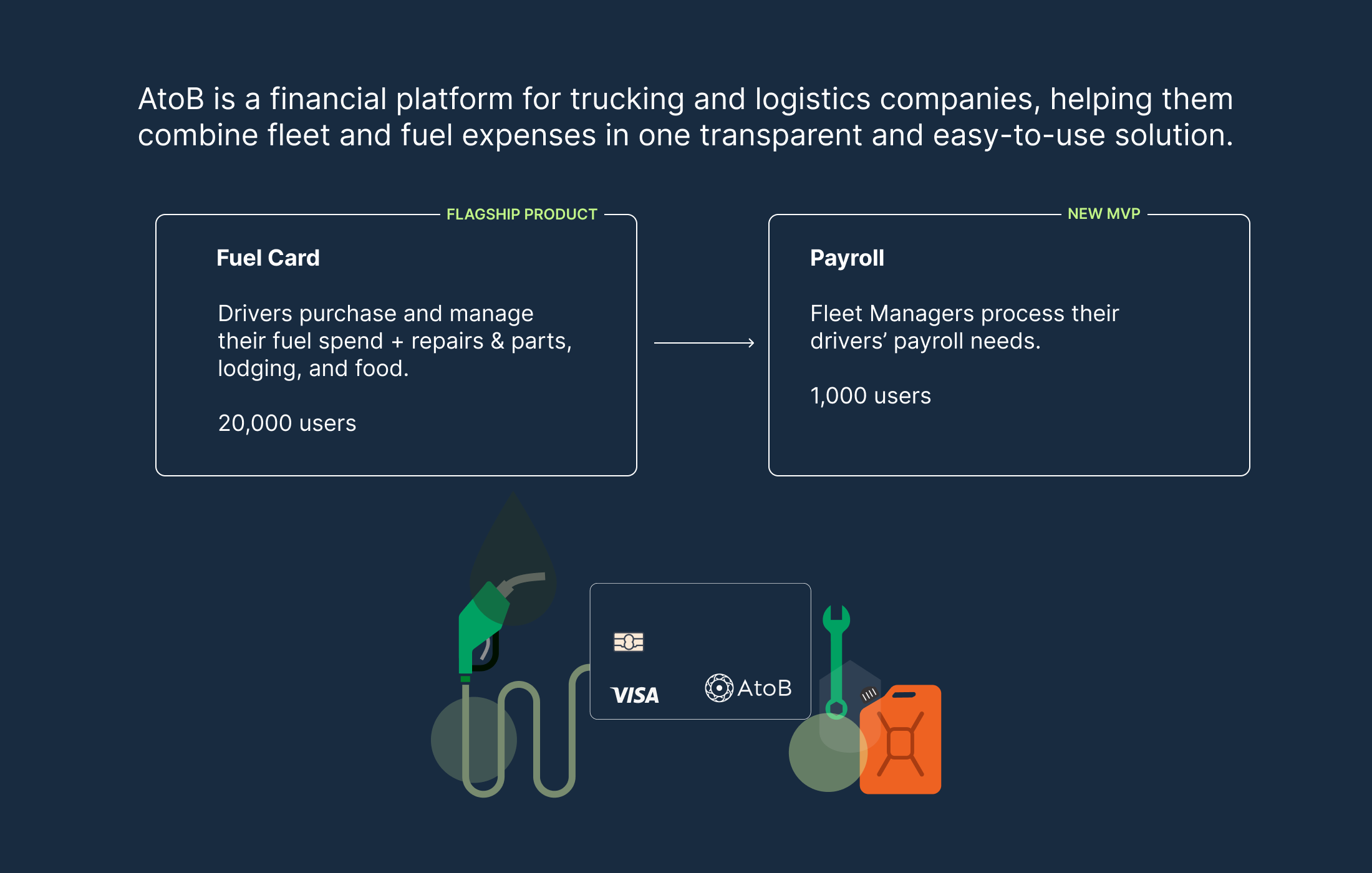
AtoB's flagship product is the Fuel Card, with over 20,000 active users. We wanted to build a flywheel of offerings that would be a perfect fit for our existing customers or serve as a wedge to bring in net new fleet managers and trucking companies. We started by creating a Payroll MVP and iterated from there.
Prioritized Customer Insights
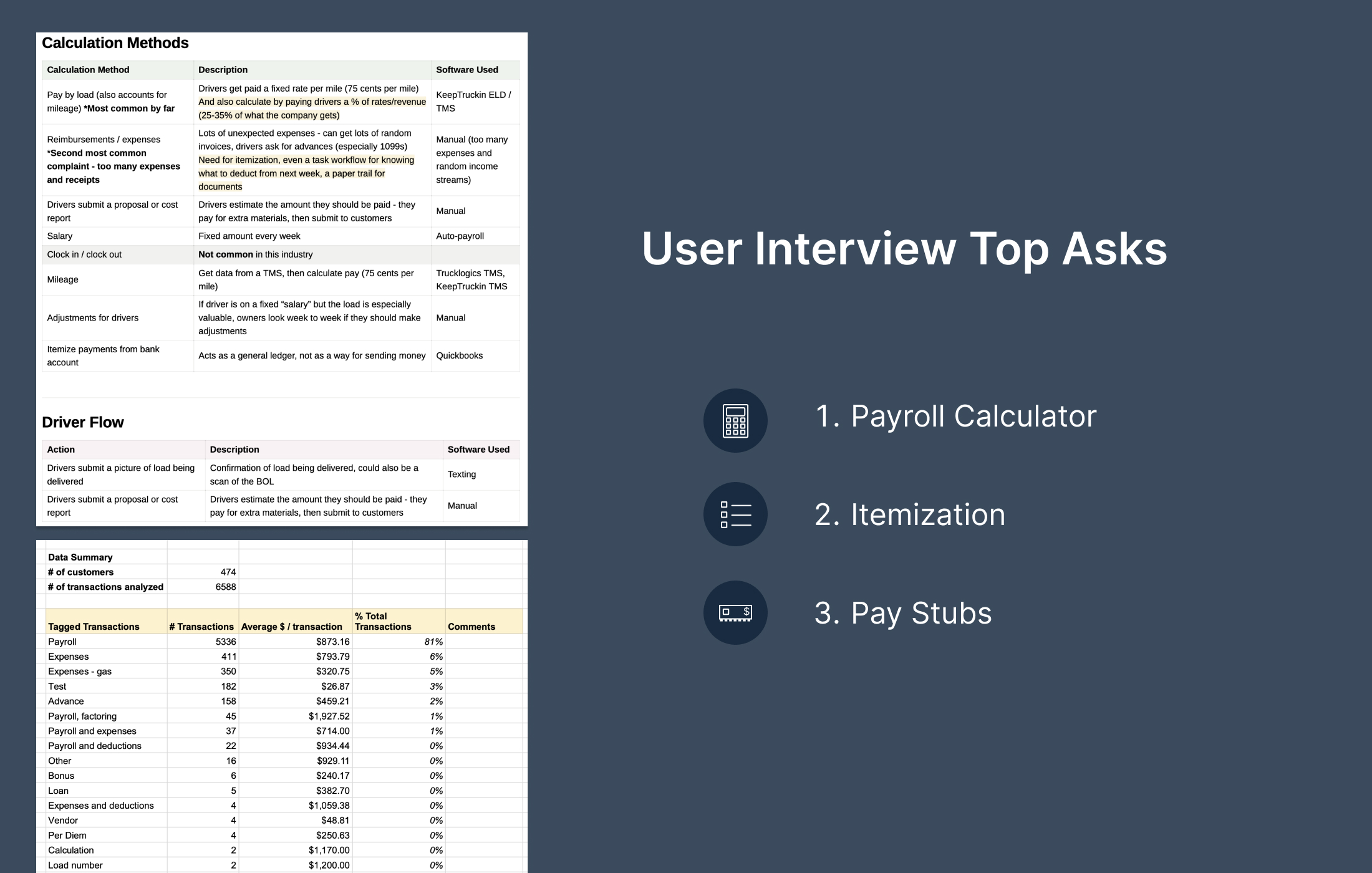
AtoB has an excellent customer support team who connected product with some of the most engaged users willing to offer their feedback. Out of 50 initial user interviews, we distilled the top asks from our drivers and fleet managers and prioritized them on our roadmap.
The most common payroll calculation method in the trucking industry is payment by load — a revenue share ranging from 25–35%. Calculation methods are highly fragmented across contractors, ranging from auto-payroll to manual adjustments and advances. A common thread was the need to track unexpected payments — this led us to itemization. Drivers also play an active role in payroll, submitting expense reports and load documentation.
Payroll Requirements
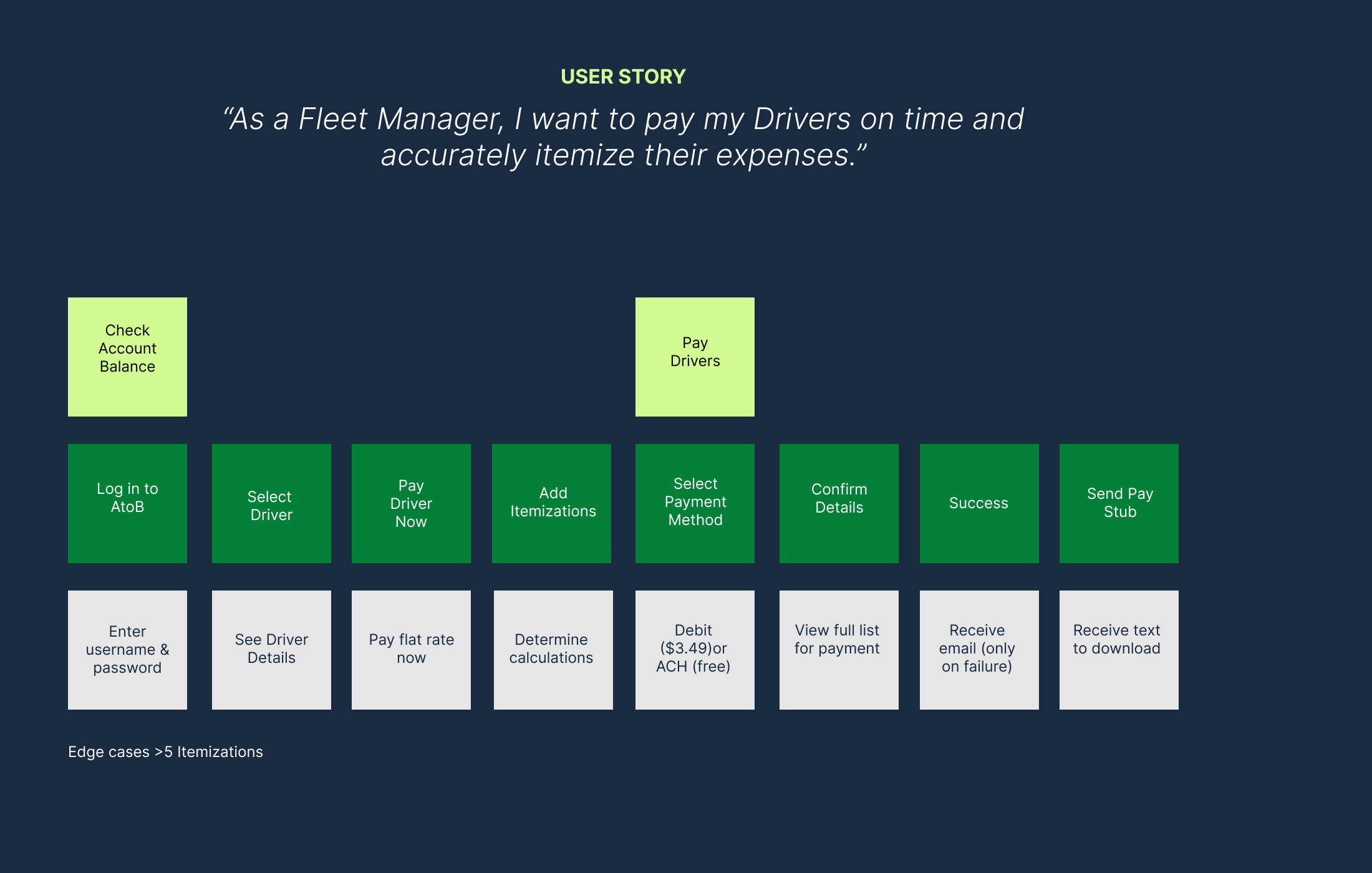
Three key findings highlighted the most important aspects of payroll we should build:
Four calculation types:
- Hourly
- Percentage of Load
- Per Mile
- Flat Rate (covers emergency cash)
Average of 2–3 itemizations per pay period (>5 are edge cases)
Sending emergency cash was critical
Key considerations: keep the flow to as few clicks as possible (think CashApp)
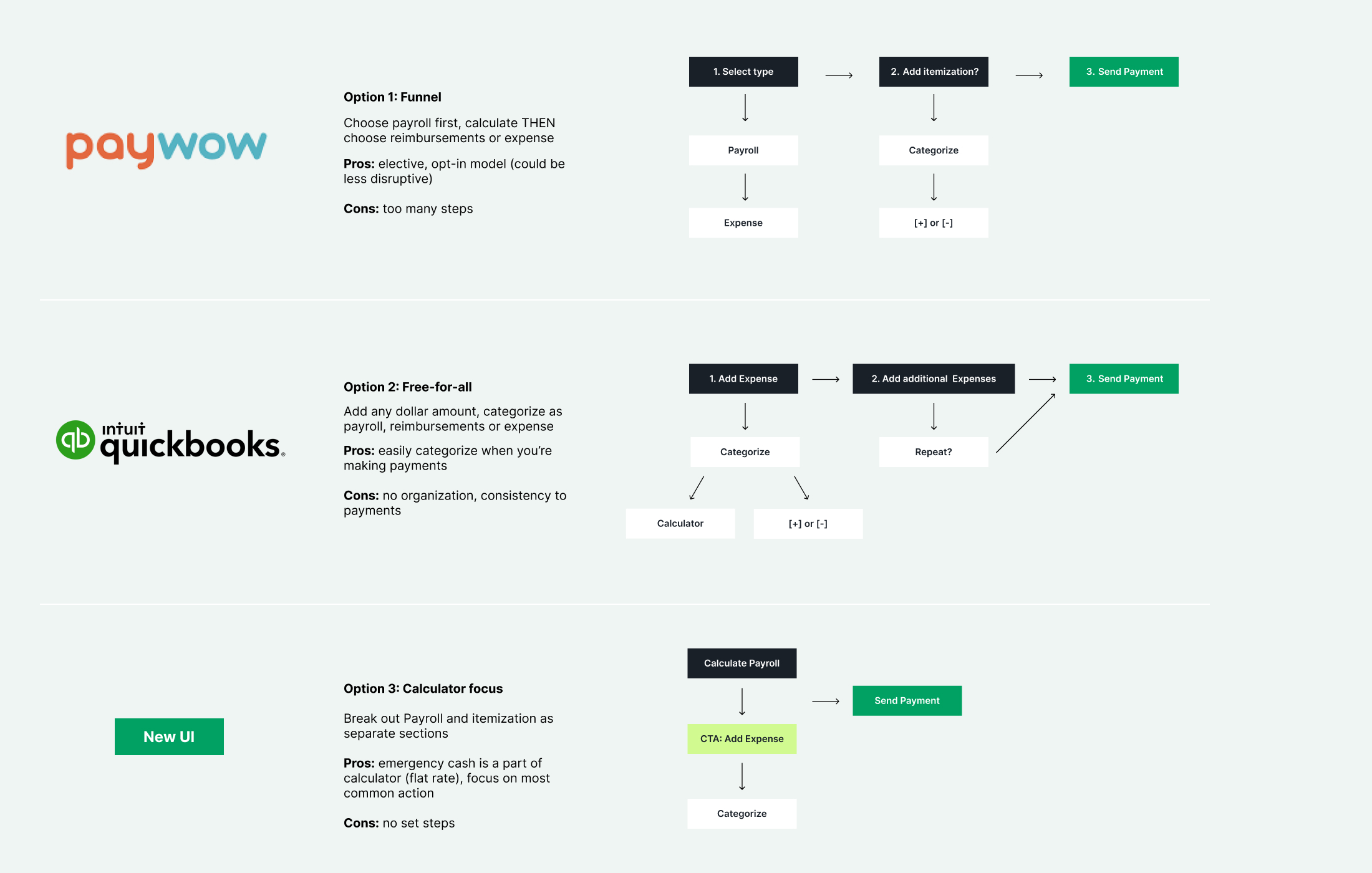
Competitive Analysis
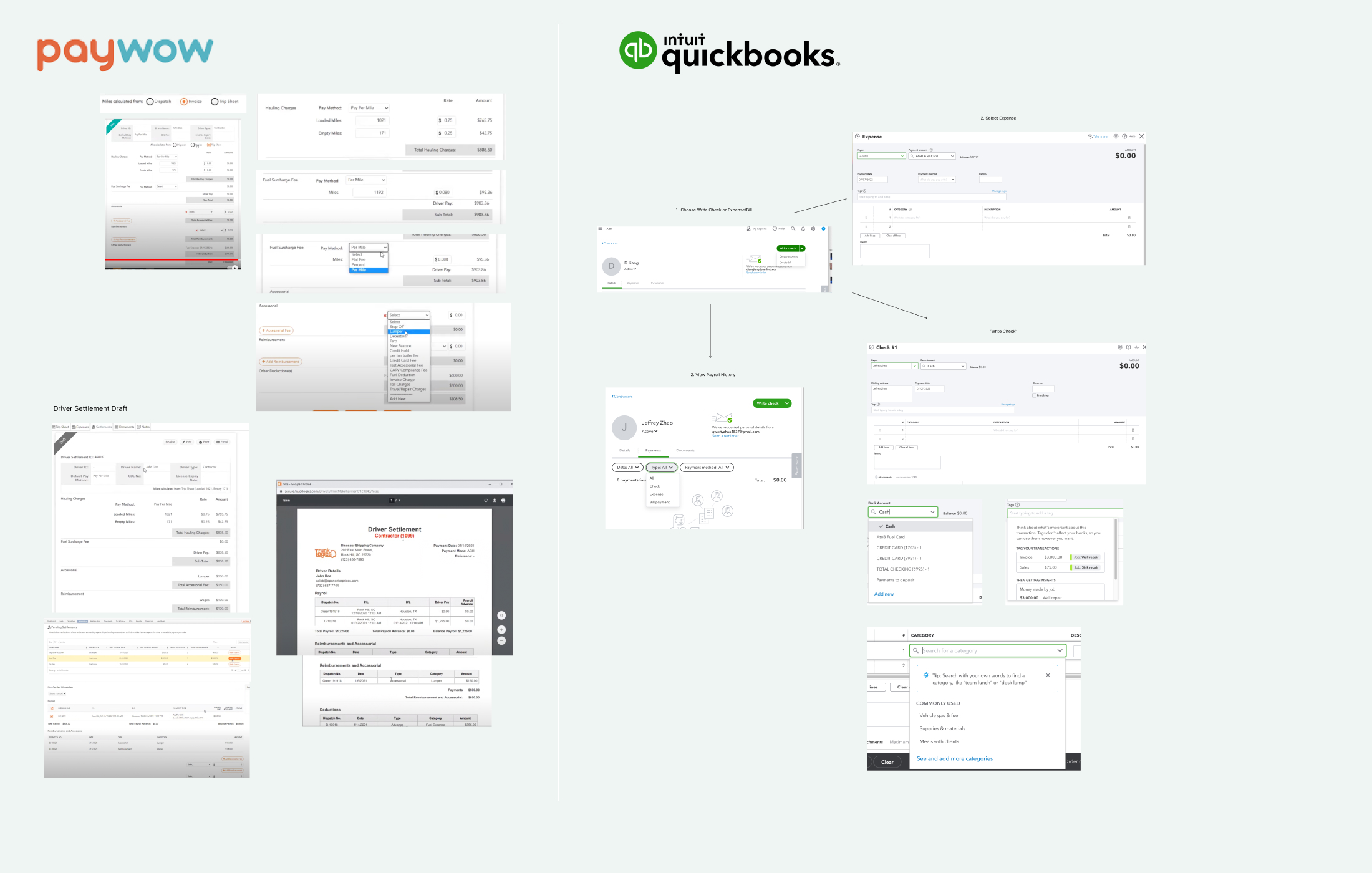
To better inform design decisions, I looked to Paywow and Quickbooks as primary references. Both had built-in payroll calculators and robust categorization systems for itemization. We saw an opportunity to simplify their approach for our specific needs at AtoB, reducing complexity while preserving the core functionality our users needed.
Payroll MVP
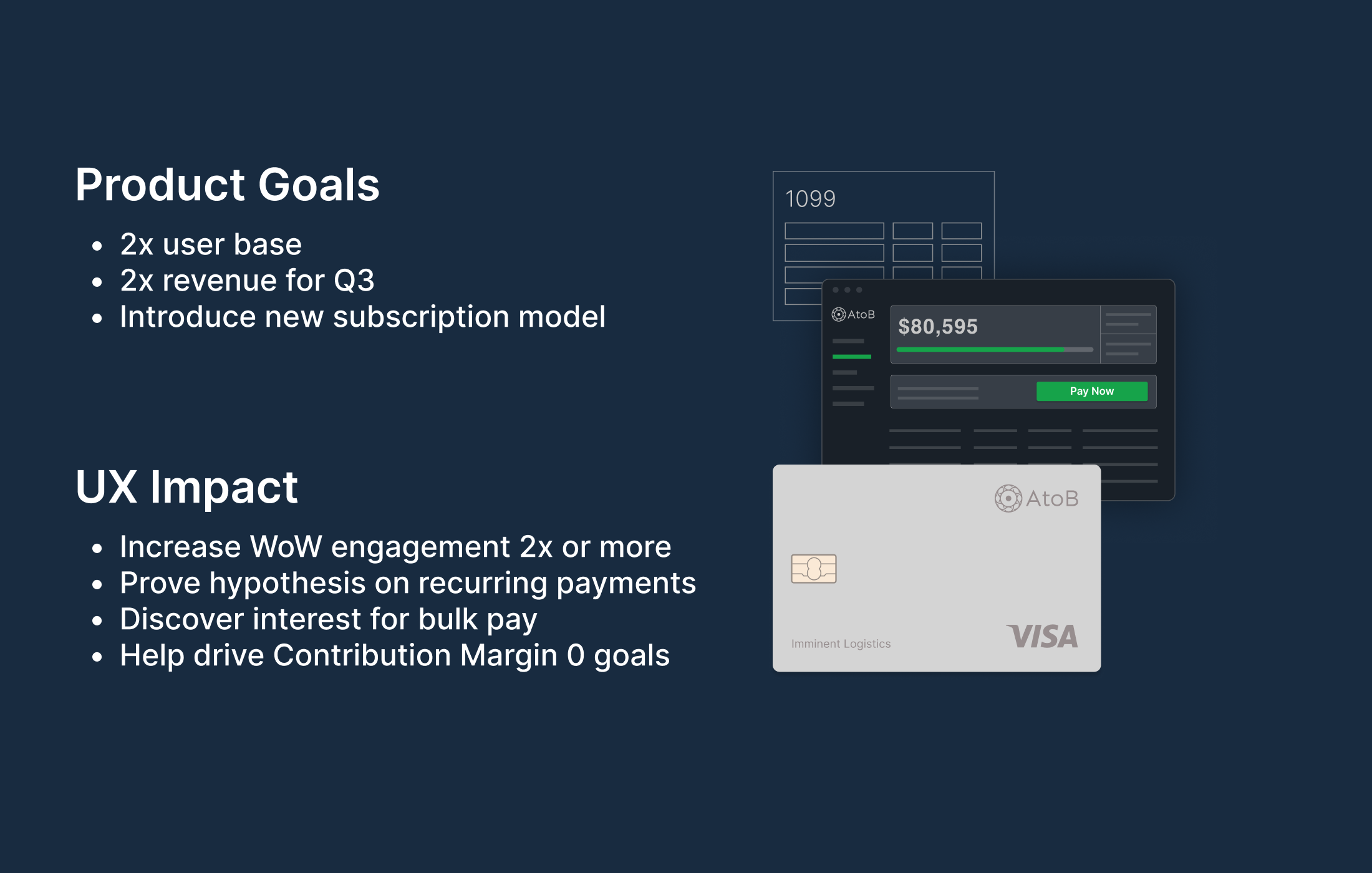
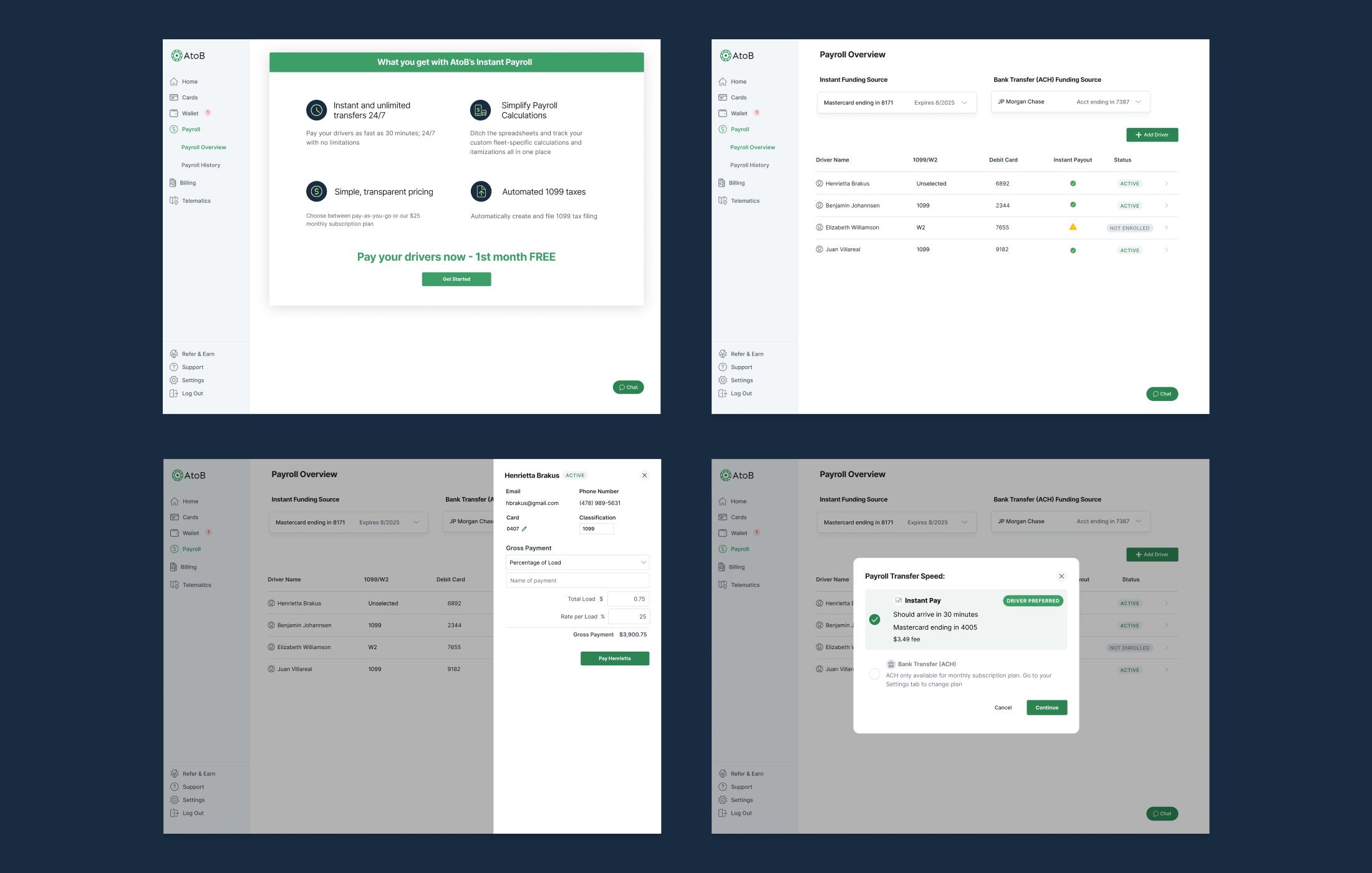
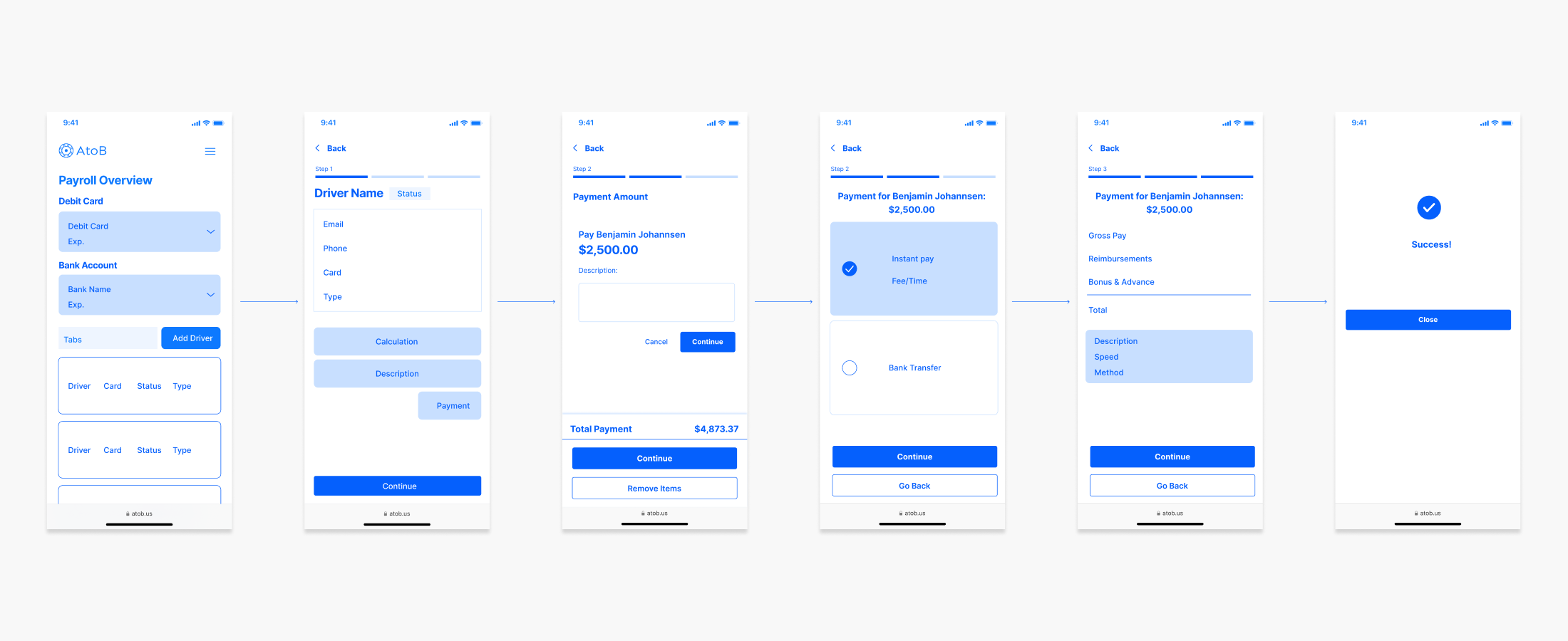
We designed the MVP quickly, following a standard linear payment flow with basic UI patterns. Knowing itemization would follow, it was important this first iteration be a simple, modular building block. To monetize, we shifted from a flat 0.25% per transaction to a two-tiered model: a $25/month + $3/employee subscription with 0.25–0.50% instant payout fees, or a pay-as-you-go 1% instant payout. The expected outcome was 2x current monthly revenue per customer while maintaining a ≥0 contribution margin.
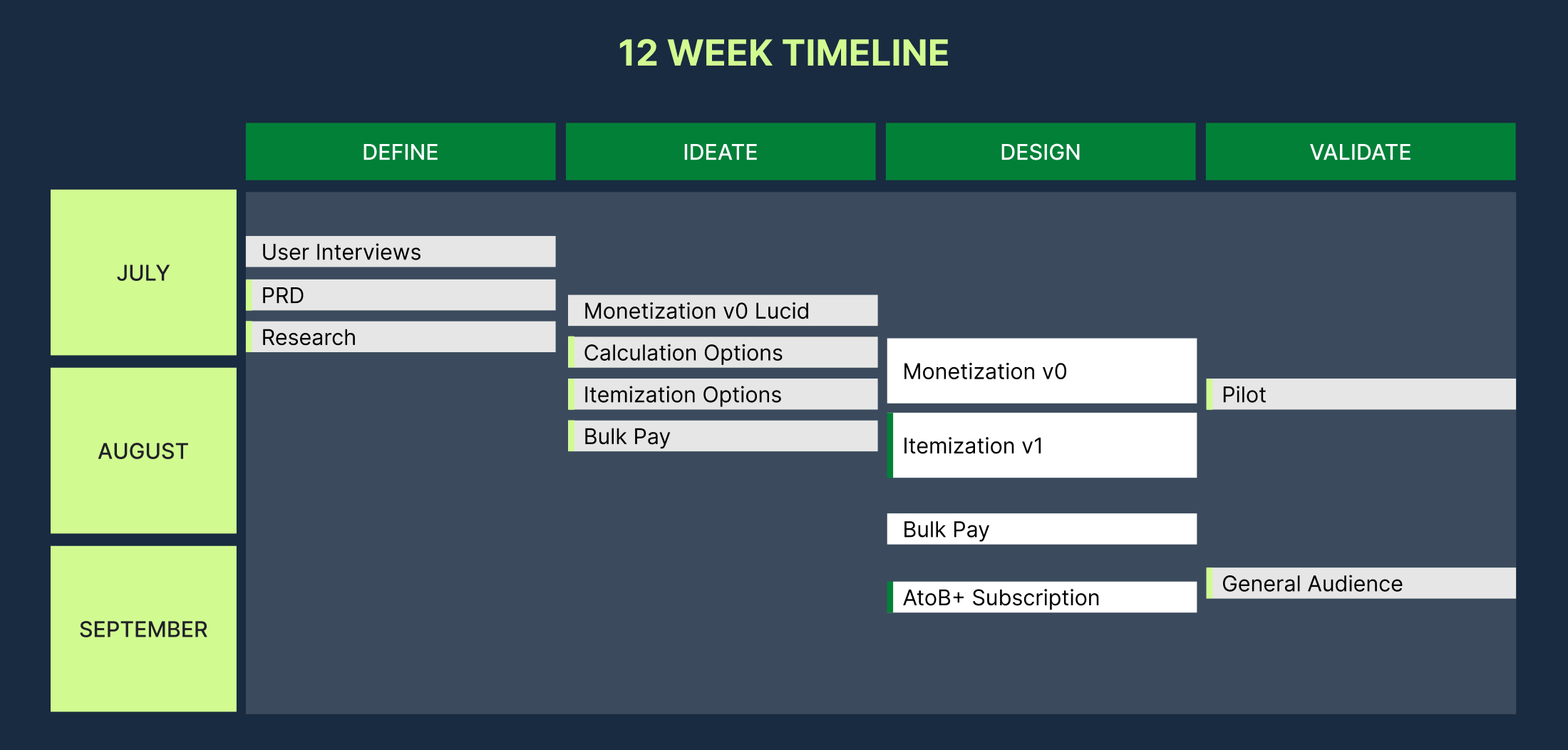
Wireframes + Validation
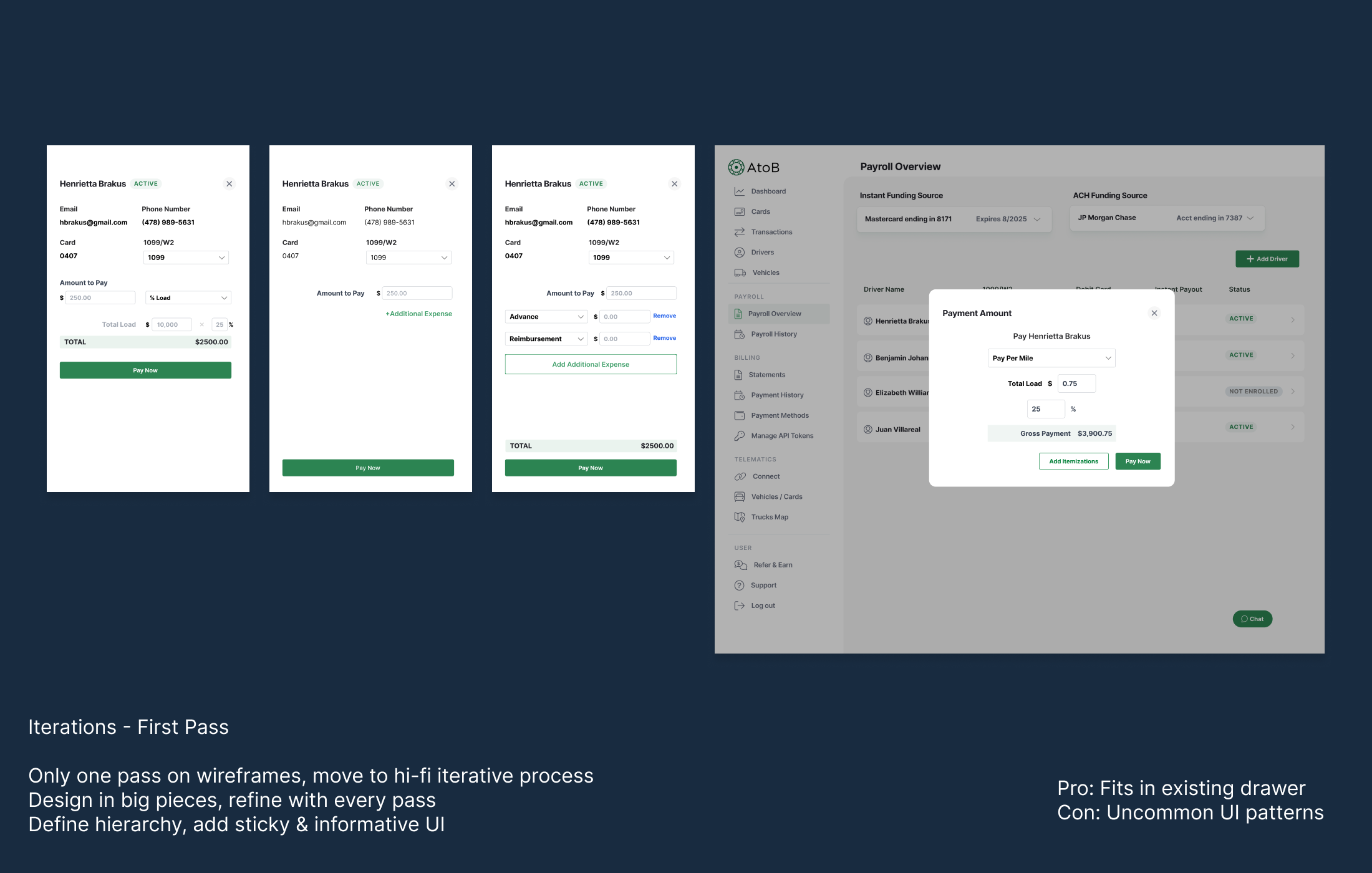
I created low-fidelity wireframes for itemization to map out screen states and flow order, and to figure out where the payment calculator should live. We ran qualitative research with core users to validate directional hypotheses. The wireframes were designed to be modular and swappable. With ~80% of users on mobile, all designs were built as responsive from the start.
Iterations
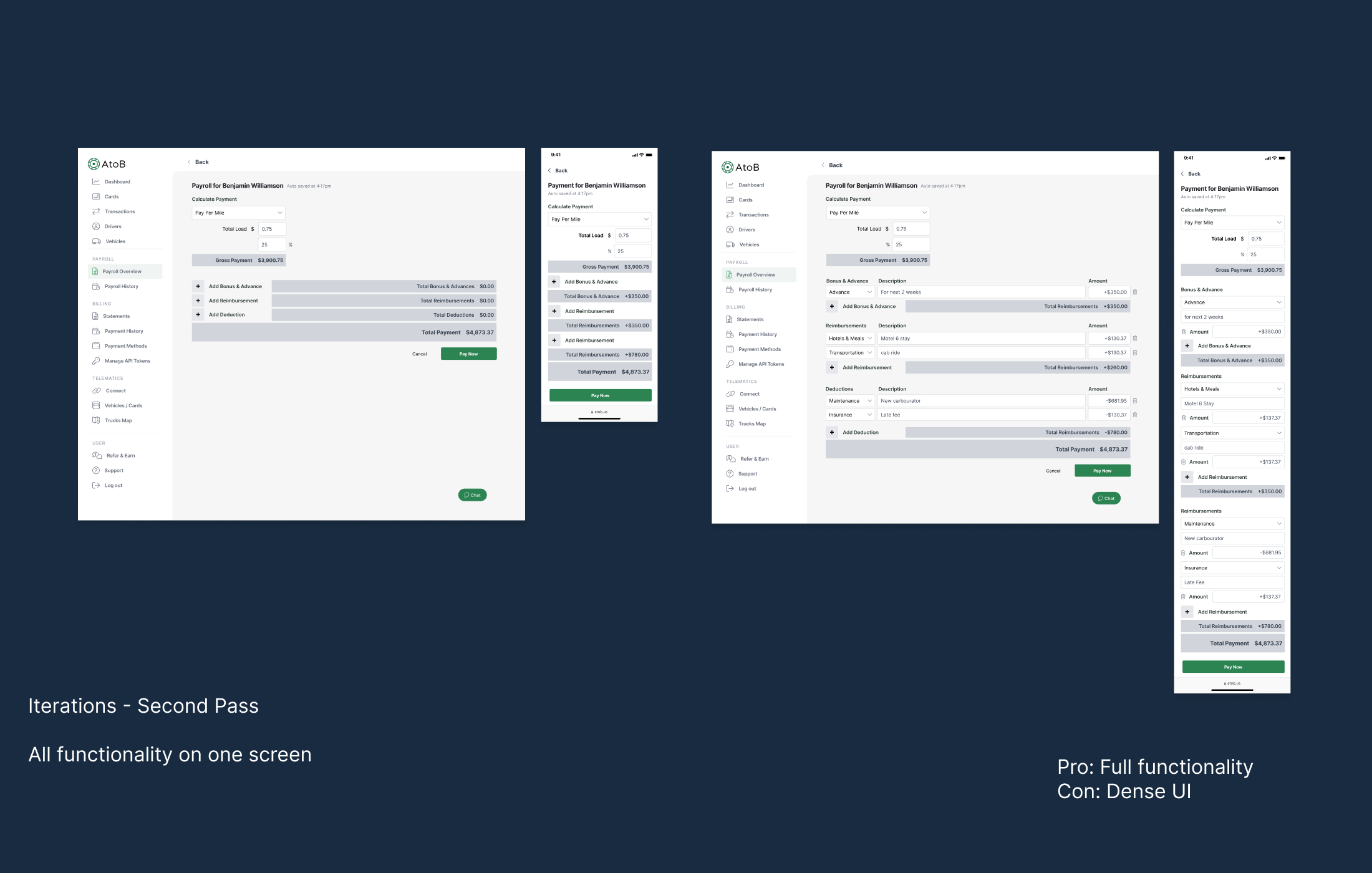
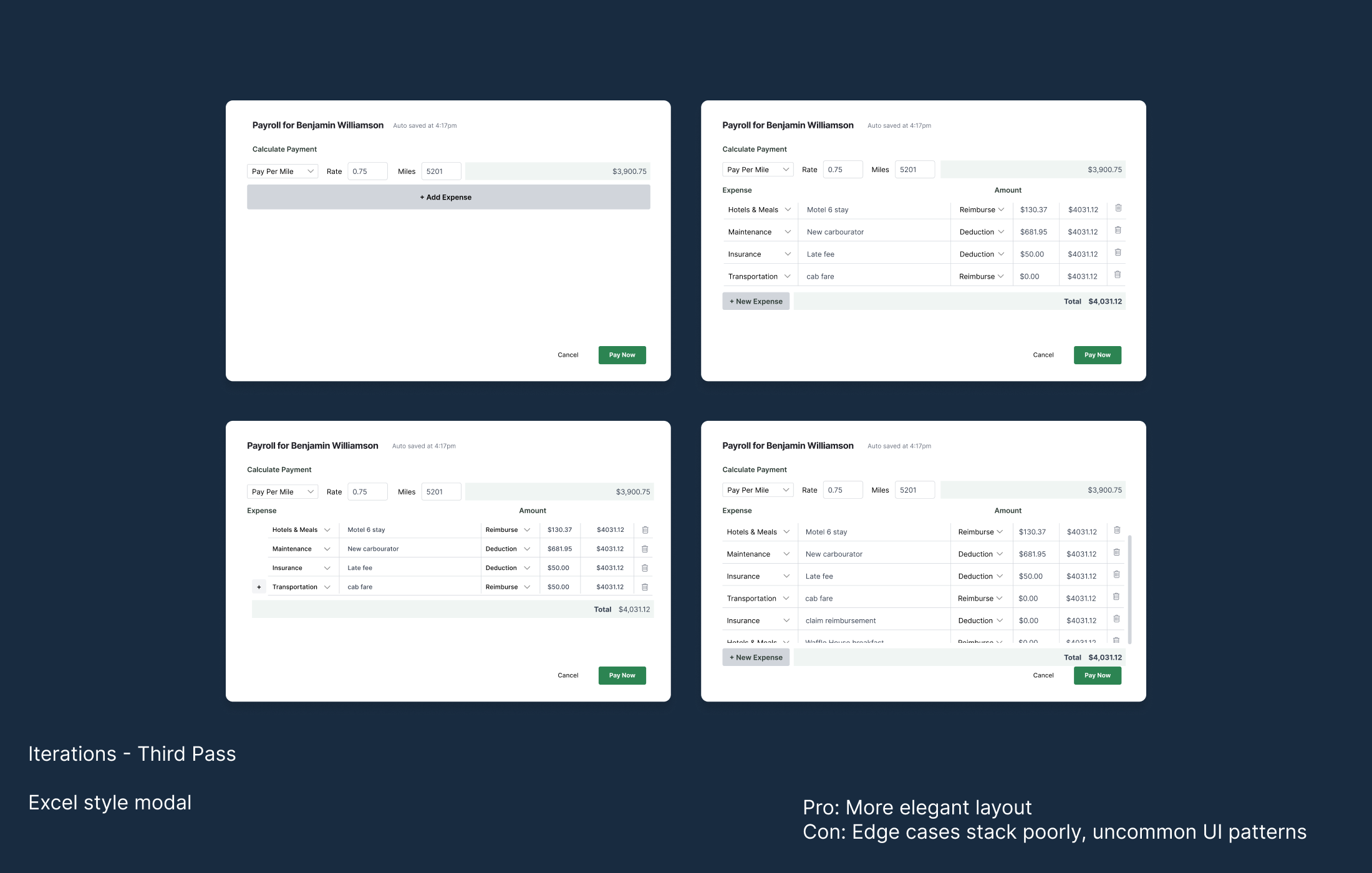
Given our product velocity, we moved quickly from wireframes to high-fidelity after one pass. We added the payment calculator onto the existing MVP UI, then expanded into expenses and reimbursements. I started each feature with the PRD essentials and stripped back from there — refining interactions section by section for a logical flow. We explored a spreadsheet-style UI inspired by how customers used Excel, but edge cases made it unwieldy, so we shifted direction.
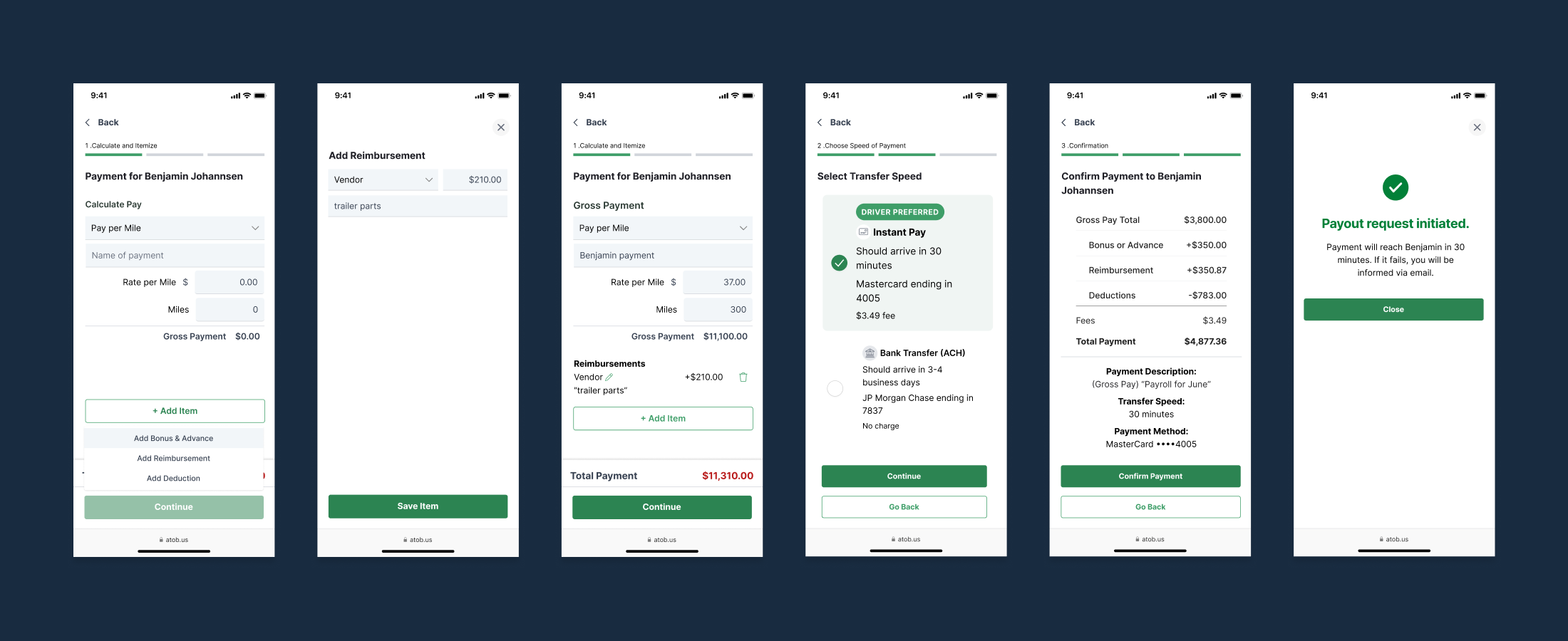
Itemization Refinements
With 80% of fleet managers accessing via mobile, we shifted focus to mobile-first flows. I leaned into the payment calculator as the primary action and moved itemization editing to its own dedicated screen to reduce information density and simplify the experience.
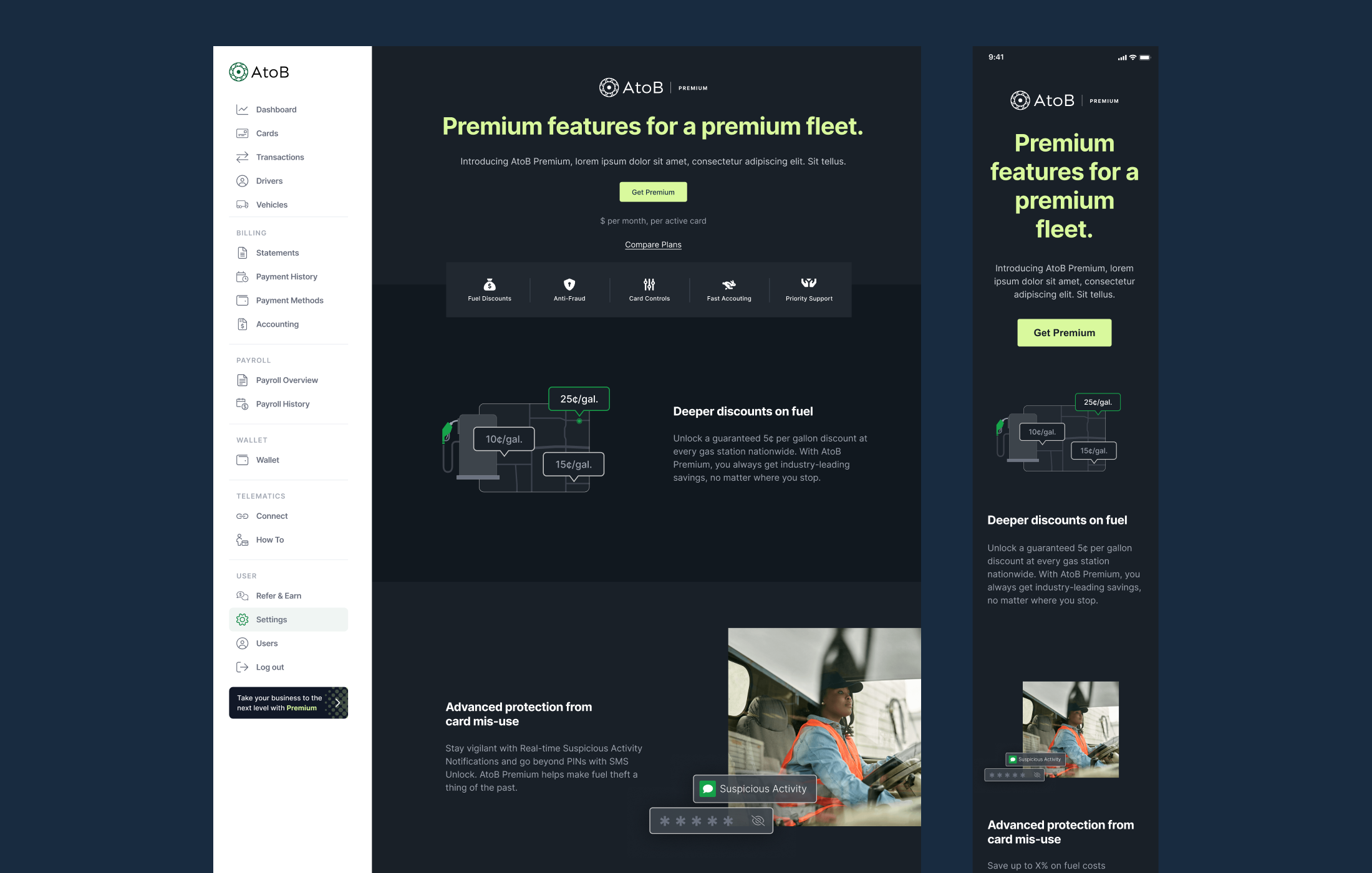
AtoB Premium
Payroll was part of a larger AtoB Premium offering that incorporated multiple subscription products into users' accounts. I designed a landing page to highlight the benefits of joining AtoB Premium and help users understand the full value of the platform.
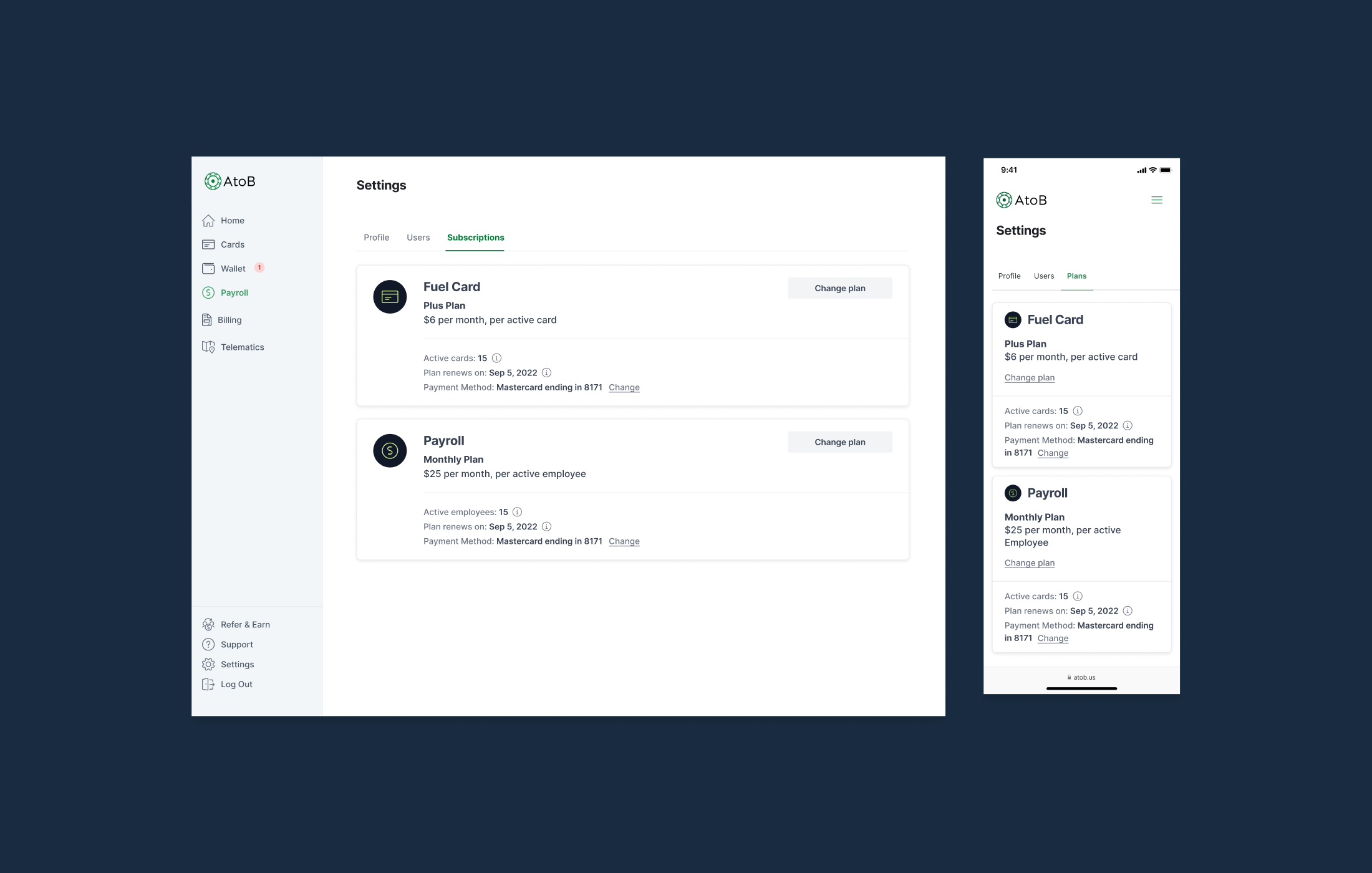
Subscriptions
With two concurrent subscriptions available on the platform, users needed a clear way to manage both from their Settings page. I designed the subscription management flow to make it easy to view, update, or cancel each subscription independently.